Tally: Bank Statements to Answers
A personal finance app for Indian bank and UPI statements. It parses, de-duplicates and categorises every transaction, then answers questions about your spending in plain English.
Tally
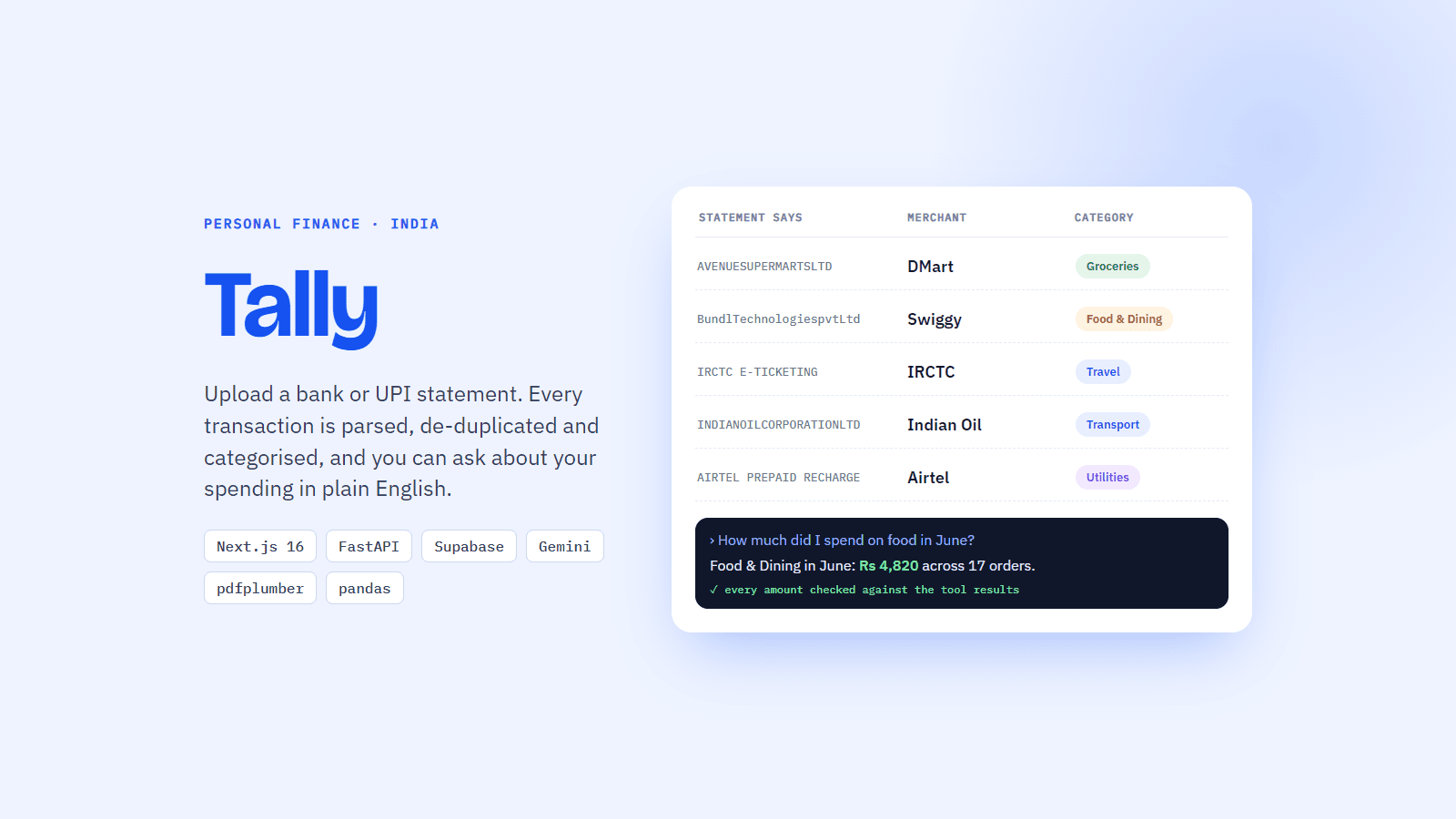
Bank statements in India are hard to read. The same shop shows up as AVENUESUPERMARTSLTD in one statement and DMART in another, Swiggy appears as BundlTechnologiespvtLtd, and every bank uses its own PDF layout. Tally takes those statements and turns them into data you can search, chart and ask questions about.
What it does
- Reads real statements. PDF, CSV and Excel files from HDFC, ICICI, SBI, Axis and Kotak, plus Google Pay UPI statements, parsed with pdfplumber, pandas and openpyxl.
- Drops duplicates. Each transaction gets a fingerprint from its date, amount, merchant and account, so uploading overlapping statements does not double-count anything.
- Names the merchant and picks a category. A layered categoriser checks your own corrections first, then known brands, then keyword and regex rules. The LLM is only a fallback.
- Answers questions. A chat assistant calls typed tools (spending summary, by category, top merchants, compare periods, recurring payments and more) over your own transactions.
- Groups spending into events, such as a trip, and shows trends on charts.
Keeping the numbers honest
The tools compute every figure, and the model only phrases the answer. Before an answer is shown, the server checks that every Rs amount in it matches a value the tools actually returned. If one does not, the answer is rejected. Actions that change data, like recategorising a merchant or merging two categories, are confirmed with text the server writes from the real result, so the assistant can never misstate what changed.
The model renders and compares numbers. It never invents them.
Categoriser, in order
- Your own corrections for that merchant
- Brand names, normalised so
AmazonPayandAmazon Payare the same key - Substring tokens for merchant names that run words together
- Regex rules for broad groups (fuel, groceries, travel, utilities)
- An LLM call, only when nothing above matched
Stack
- Frontend: Next.js 16 (App Router), React 19, TypeScript, Tailwind CSS, TanStack Query, Recharts
- Backend: FastAPI on Python 3.12, Supabase (PostgreSQL with row-level security, Auth)
- LLM: Google Gemini with round-robin across keys and an OpenRouter fallback when every key is rate-limited
- Tests: 34 backend test files
Status
Working and deployed. The demo needs a free account. Budgeting and alerts are not built yet.
More projects
GitHub Wiki Vault: A Brain Map of My Code
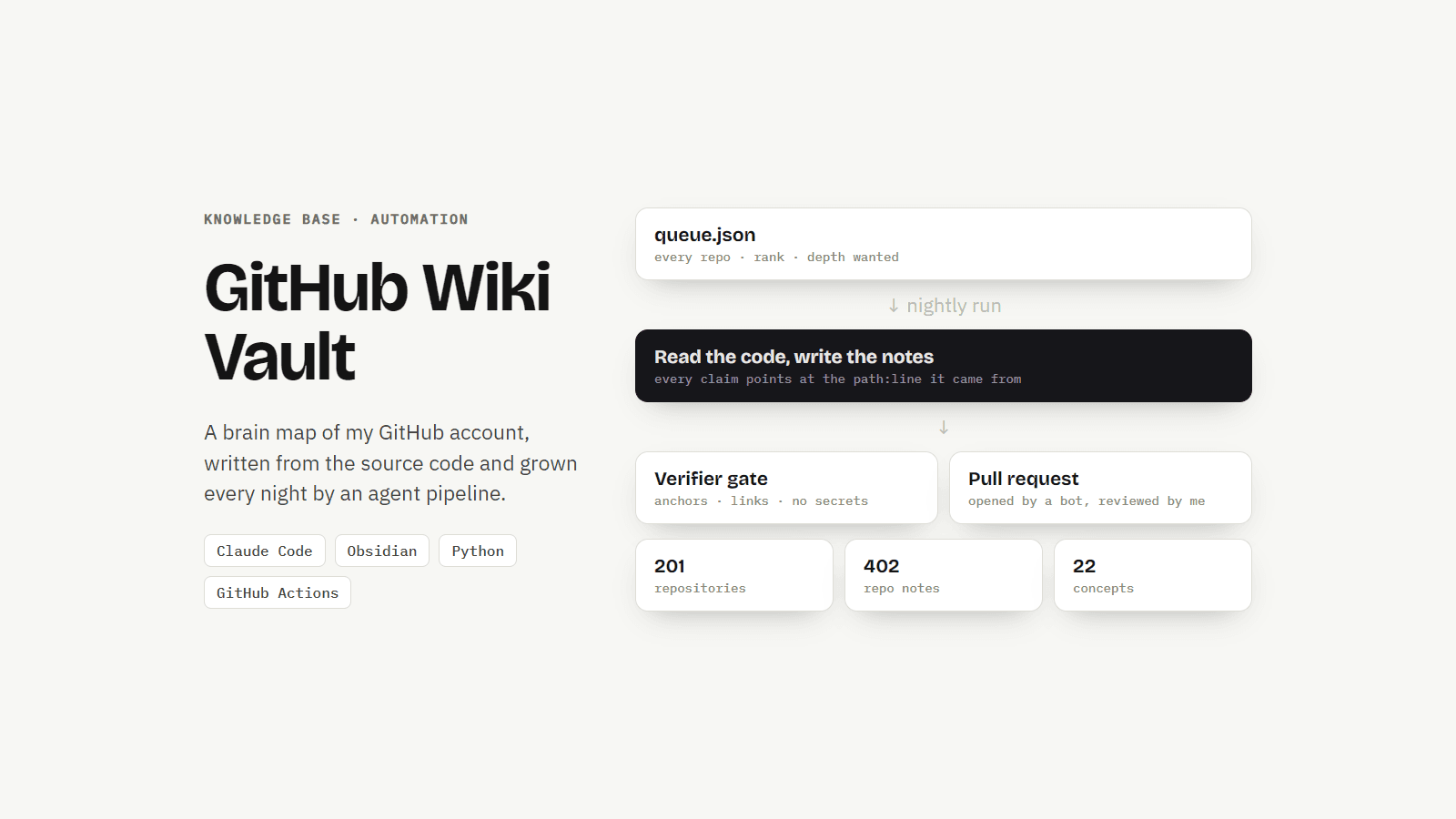
An Obsidian vault that maps every repository on my GitHub account from its source code, grown every night by an AI agent pipeline that I designed and review. The code is private on purpose.
Knowledger: Chapters, Blocks and a Knowledge Graph
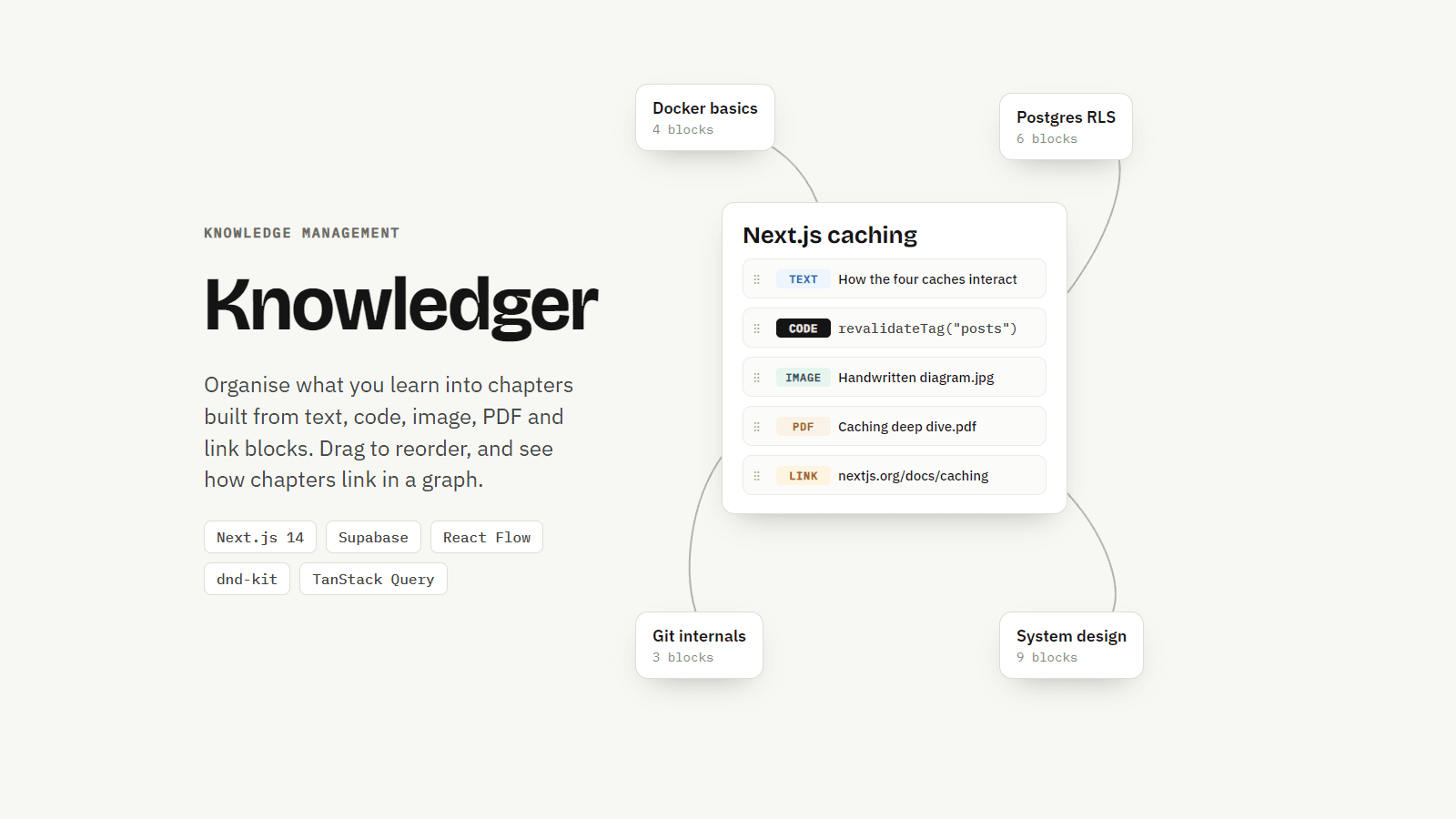
A Notion-style knowledge app. Organise what you learn into chapters made of text, code, image, PDF and link blocks, reorder them by drag and drop, and see how chapters connect in a graph.
VectorSwift: Visual Pipeline Builder
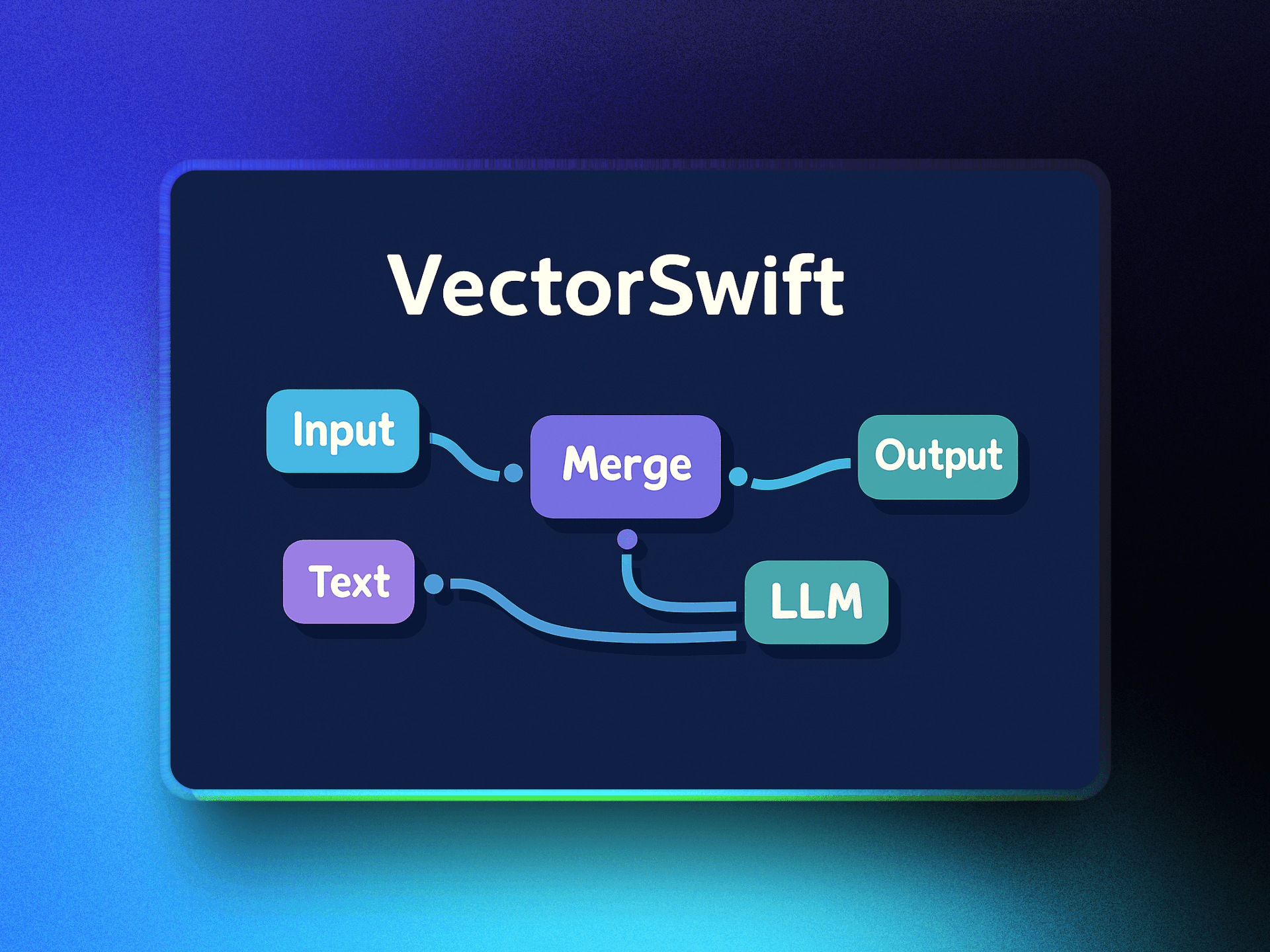
Build, connect, and validate data pipelines visually with VectorSwift, a React-based DAG editor featuring real-time validation and backend integration.