GitHub Wiki Vault: A Brain Map of My Code
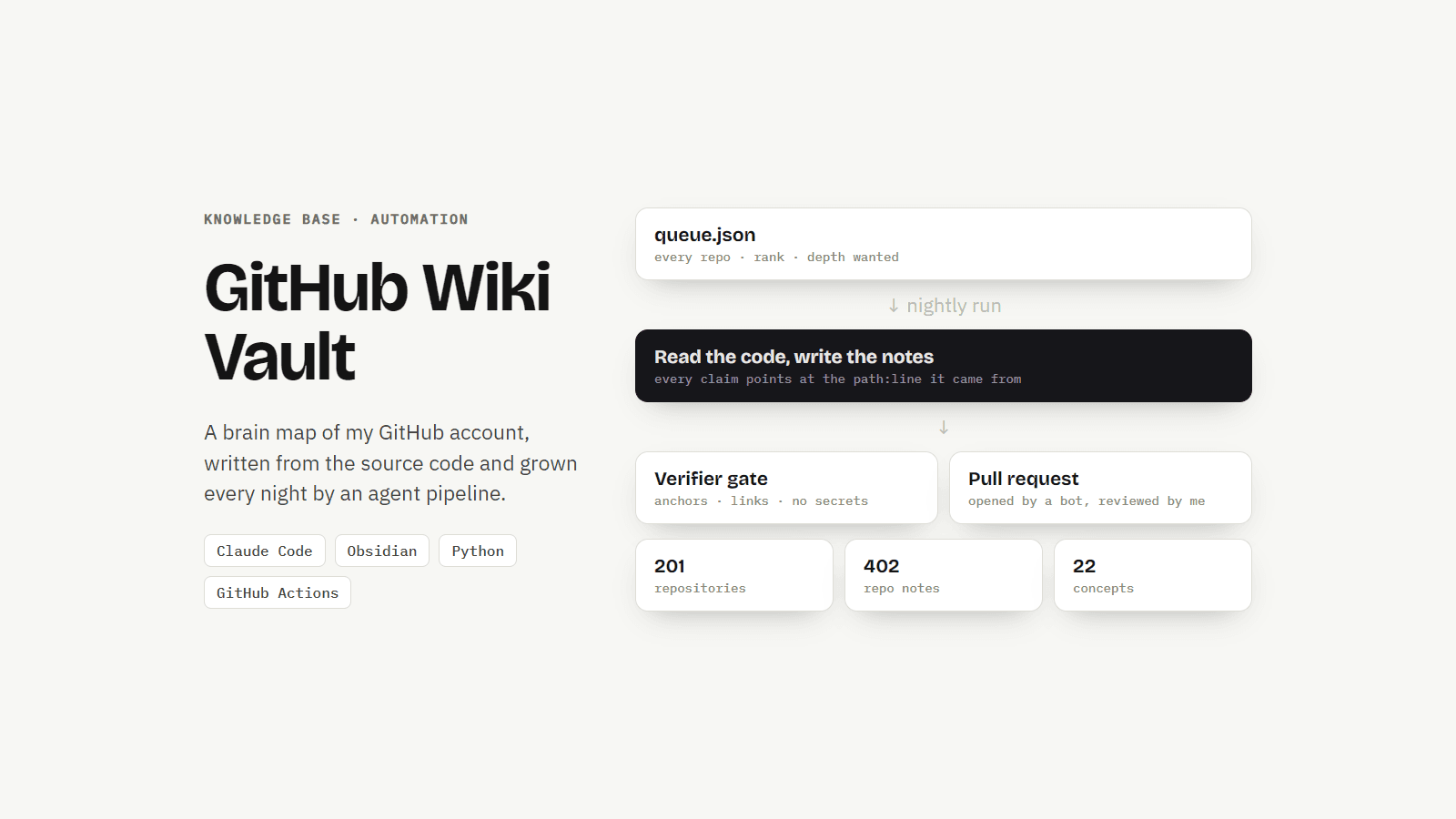
An Obsidian vault that maps every repository on my GitHub account from its source code, grown every night by an AI agent pipeline that I designed and review. The code is private on purpose.
Rishabh Dubey
September 5, 2026
GitHub Wiki Vault
After a few years of side projects, hackathons and take-home assignments, I had more than two hundred repositories and no reliable memory of what was in them. READMEs went stale, half-finished ideas were hard to find, and I kept solving the same problems twice. So I built a second brain for my GitHub account, written from the code itself rather than from what I remembered about it.
The code for this project is not public, and that is a deliberate choice. The vault reads every repository I have, including private and client work, so publishing it would publish those too. This page explains how it works instead.
What is in it
- One folder per repository. A summary note, plus architecture, flows, snippets, optimisation and case-study notes where there is real content for them.
- Concept notes for patterns that recur across projects, each listing every repository that shows it.
- Technology notes, one per stack, on how my use of it changed from project to project.
- Cross-repository notes on what I do well, what I keep getting wrong, which code is worth reusing and which projects died and why.
- A standard header on every summary: status, an honest 0 to 100 completeness score, whose code it is and whether the README matches the code.
The rules every note follows
- Every factual claim carries a
path:linethat was opened and checked. A claim that cannot be anchored is deleted, not softened. - Code snippets are copied verbatim and labelled with their file and line range.
- A README is a claim to test, never a source.
- No placeholders, no pasted tool output, no truncation.
- Secrets are never written down. No secret value ever appears in a note.
How it grows
A scheduled Claude Code agent runs every night. It takes the next repositories from a ranked queue, clones each one, reads the code and writes or deepens its notes. Before anything is committed, a Python verifier checks that every path:line reference resolves, that no link dangles, that no placeholder or unredacted secret survives and that every repository links to the concepts it shares with others. A run that fails the gate goes back to writing.
- Review, not trust. Each run pushes a branch, and a GitHub Actions workflow opens the pull request as a bot, so I review and merge the work instead of authoring it.
- Resumable runs. In-flight state is kept on the run branch, so a run that is cut off is picked up by the next one.
- A watchdog. A morning workflow opens an issue if the night's run is missing or stuck.
- Measured. Every failure, skip and workaround is logged as an issue, and every run records what it did. The stats on the vault's front page are generated from those logs.
Where it stands
As of October 2026 the vault covers 201 repositories with 402 repository notes, 22 concept notes and 27 technology notes, and 47 repositories are written up in full depth. It is also the reason this portfolio was refreshed: the projects on this site were picked using the vault's grades.
Stack
- Agent: Claude Code, run as a scheduled cloud routine with a written runbook
- Tooling: Python scripts for verification, ranking, issue tracking and PR labelling
- CI: GitHub Actions for opening and labelling PRs, the nightly watchdog and the verification gate
- Reading: Obsidian, with wikilinks, graph view, backlinks and Dataview tables
More projects
Tally: Bank Statements to Answers
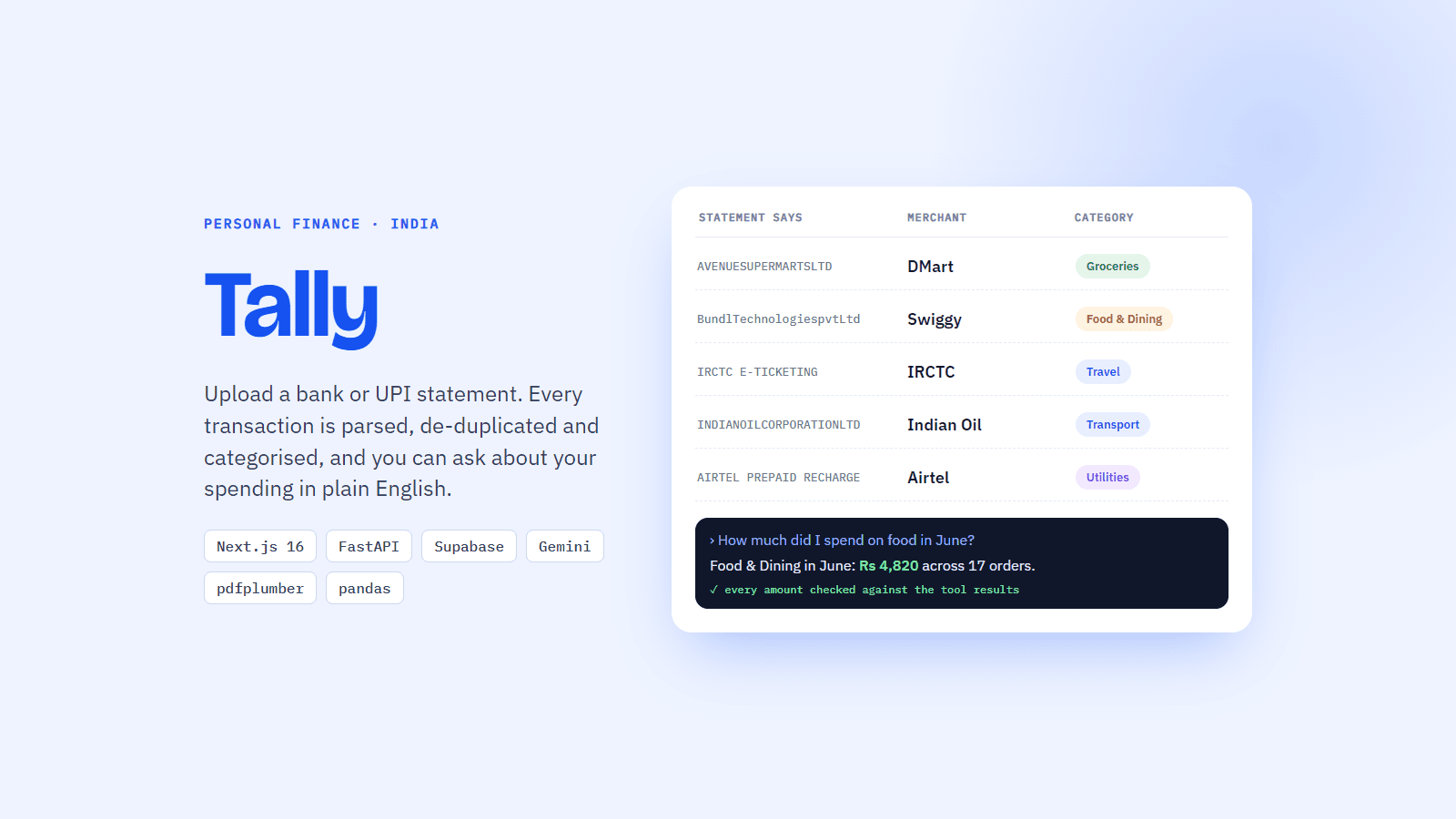
A personal finance app for Indian bank and UPI statements. It parses, de-duplicates and categorises every transaction, then answers questions about your spending in plain English.
Knowledger: Chapters, Blocks and a Knowledge Graph
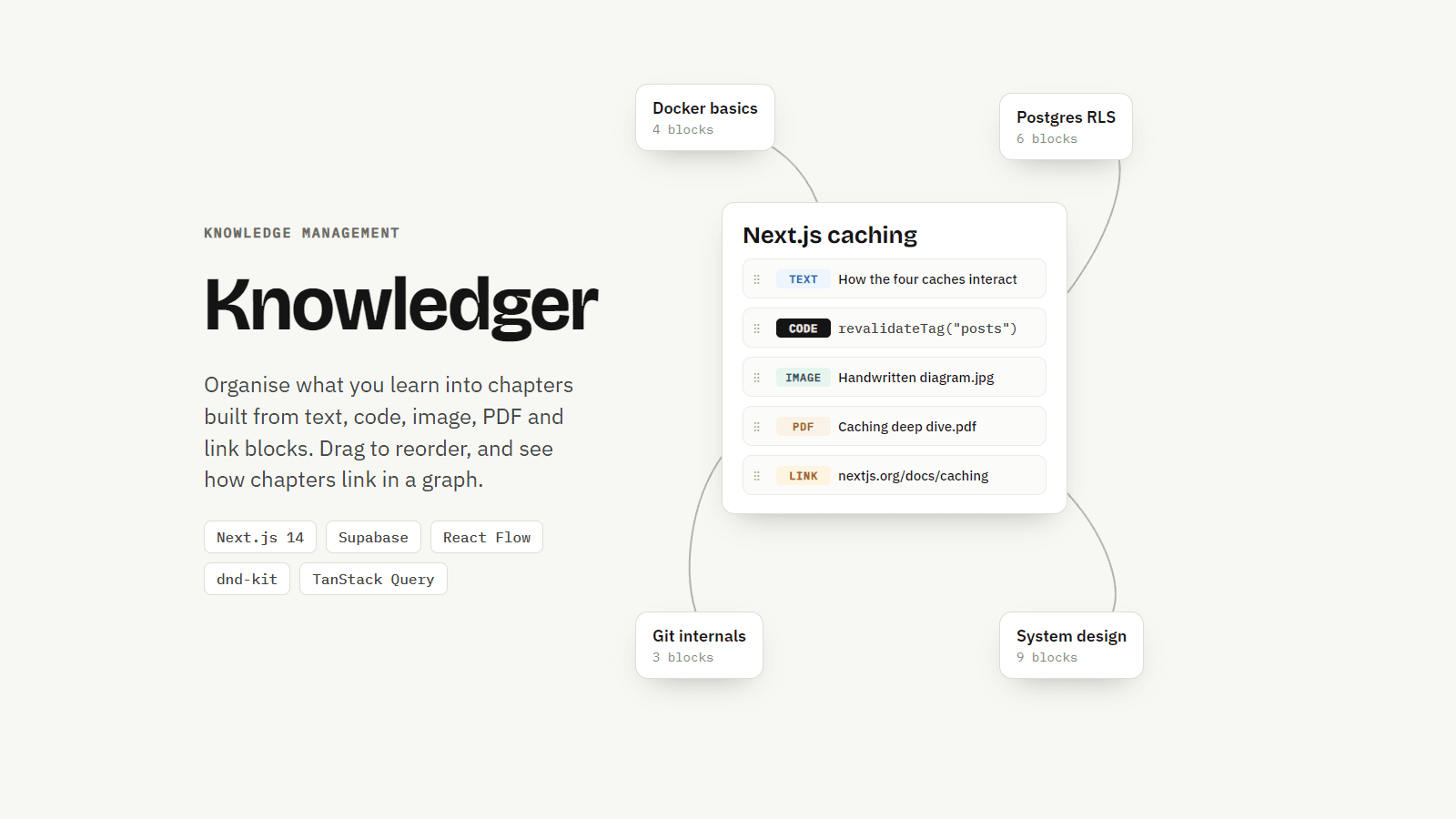
A Notion-style knowledge app. Organise what you learn into chapters made of text, code, image, PDF and link blocks, reorder them by drag and drop, and see how chapters connect in a graph.
VectorSwift: Visual Pipeline Builder
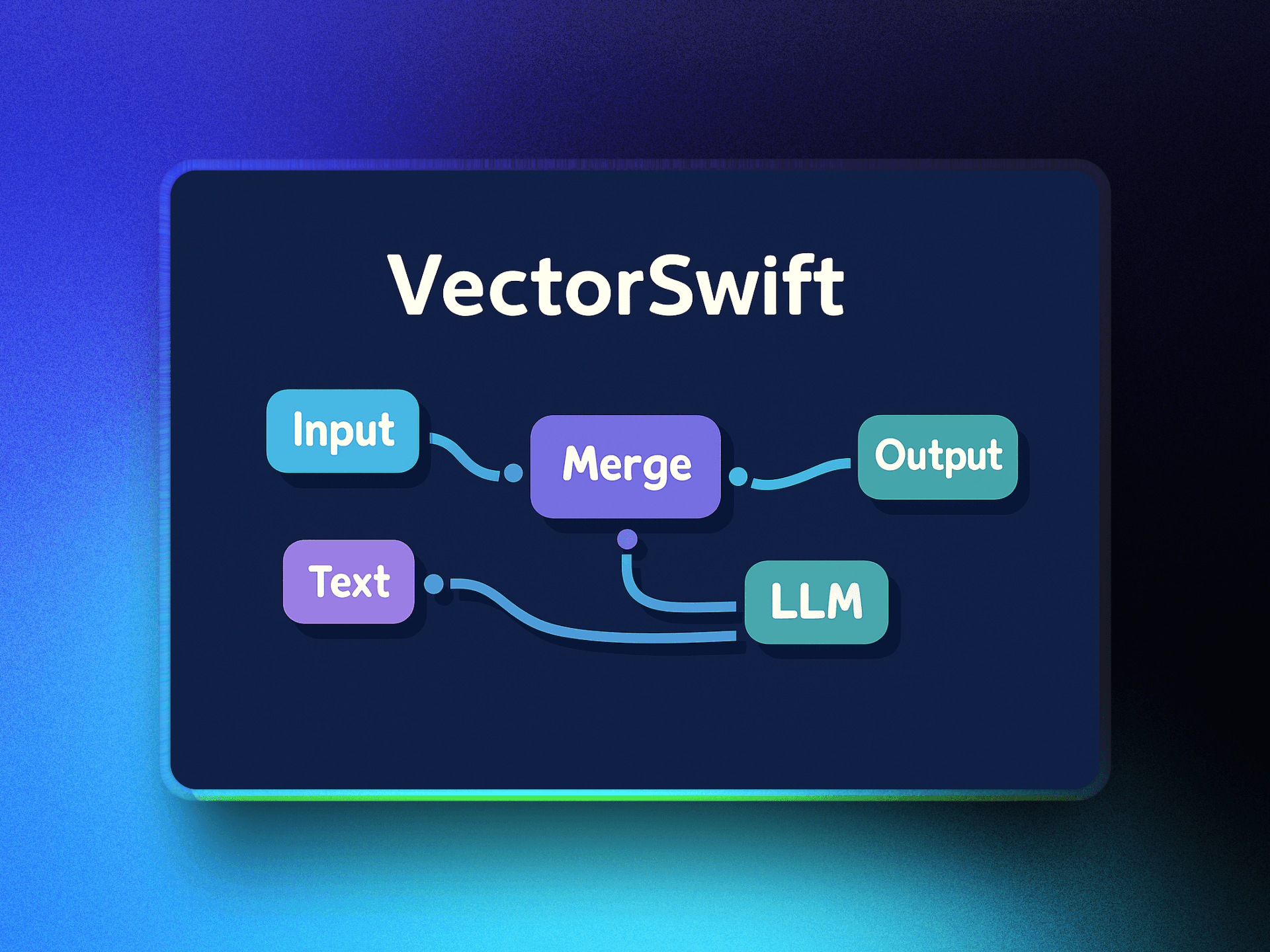
Build, connect, and validate data pipelines visually with VectorSwift, a React-based DAG editor featuring real-time validation and backend integration.